
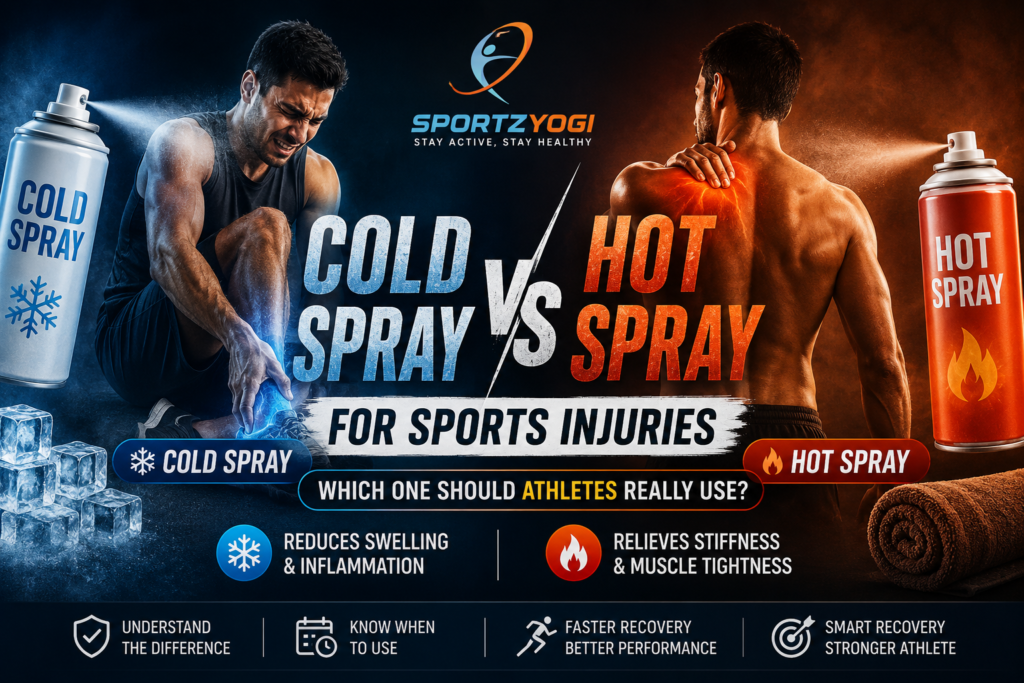
Cold Spray vs Hot Spray for Sports Injuries: Which One Should Athletes Use?
Cold Spray vs Hot Spray for Sports Injuries: Sports injuries are extremely common among athletes, gym-goers, and students involved in physical activities. Whether it is a twisted ankle during basketball, shoulder stiffness after badminton, or muscle soreness after intense training, recovery plays a very important role in performance and long-term fitness.
However, one of the most common mistakes athletes make is using the wrong pain relief spray at the wrong time. Cold spray and hot spray both help in pain relief, but they work in completely different ways inside the human body. Understanding Cold Spray vs Hot Spray helps athletes recover faster, reduce pain, and avoid unnecessary complications.
❄️ What Is Cold Spray? (Cryotherapy)
Cold spray is a fast-acting cooling treatment used mainly for fresh sports injuries. In sports science, this method is known as Cryotherapy, which uses cold to reduce pain, swelling, and inflammation in injured tissues. Athletes commonly use cold spray in sports like football, basketball, cricket, athletics, and gym training because it provides instant temporary relief right after injury.
How Cold Spray Works
Cold spray works through a combination of rapid cooling and nerve response control. Most cold sprays contain ingredients such as ethyl chloride, alcohol-based cooling agents, and sometimes menthol.
When ethyl chloride is sprayed on the skin, it evaporates very quickly. During this evaporation process, it absorbs heat from the skin surface. This sudden heat loss creates a rapid cooling effect known as evaporative cooling.
At the same time, menthol (if present) activates special cooling receptors in the skin called TRPM8 receptors. These receptors send signals to the brain that create a sensation of cooling, even if the temperature change is temporary. Because of this dual effect, the nerves around the injured area become less active for a short time, which reduces pain sensation and provides immediate relief.
Best Cold Spray Products for Athletes
Some of the most commonly used cold sprays in sports recovery include:
- Mueller Coolant Cold Spray
- Biofreeze Spray (International sports recovery brand)
- Fast&Up Ice Spray (India)
- Dr. Ortho Cold Spray (India)
- Ethyl Chloride Spray (sports medical use)
These sprays are widely used by physiotherapists and sports trainers for quick injury management during matches and training sessions.

When Should Cold Spray Be Used?
Cold spray is most effective during the early stage of injury when swelling and inflammation are at their peak. It is recommended for fresh injuries such as ankle sprains, sudden muscle pulls, knee twists, and acute sports-related pain.
In simple terms, cold spray is best when the injury has just happened and the area is swollen or painful.
🔥 What Is Hot Spray? (Thermotherapy)
Hot spray is used for muscle stiffness, soreness, and old injuries. In sports science, this treatment is called Thermotherapy, which means using heat to improve blood circulation and relax muscles. Unlike cold spray, hot spray is not meant for fresh injuries with swelling. Instead, it is more suitable for recovery after workouts, chronic pain, and muscle tightness. Hot sprays are commonly used by athletes before training sessions to loosen muscles and improve flexibility.
How Hot Spray Works
Hot sprays contain ingredients like methyl salicylate, camphor, capsaicin, and menthol. These compounds work together to improve blood flow and reduce muscle stiffness.
When applied to the skin, methyl salicylate creates a warming sensation by increasing local blood circulation. Camphor stimulates nerve endings, which helps reduce pain and creates a soothing effect. Capsaicin, which is derived from chili peppers, works on pain receptors in the nerves and helps reduce long-term discomfort over time. Although many hot sprays feel cool at first due to menthol, the stronger effect inside the muscles is warmth and improved circulation.
Best Hot Spray Products for Athletes
Some of the most popular hot sprays used in sports recovery are:
- Volini Spray (India)
- Moov Spray (India)

- Iodex Spray (India)
- Deep Heat Spray (International)
- Tiger Balm Spray (International)

These products are widely used for muscle recovery, stiffness relief, and post-training relaxation.
🧠 What Happens Inside Muscles After Exercise?
After intense physical activity, muscles experience microscopic damage in muscle fibers. This is a normal part of training adaptation and strength development.
During recovery, muscles often become tight, flexibility reduces, and waste products accumulate inside tissues. This condition is commonly known as DOMS (Delayed Onset Muscle Soreness), which usually appears 24 to 48 hours after exercise.
🔥 How Hot Spray Helps Recovery
Hot spray improves recovery by increasing blood circulation through a process called vasodilation, which means widening of blood vessels. When blood vessels expand, more oxygen and nutrients reach the muscles. This helps reduce tightness, improve flexibility, and speed up recovery. This is why hot spray is often used after workouts or before stretching sessions to prepare the body for movement.
❄️ How Cold Spray Helps Injury Recovery
Cold spray helps by reducing tissue temperature and causing vasoconstriction, which means narrowing of blood vessels. When blood vessels become narrow, swelling reduces, fluid buildup slows down, and pain signals decrease. This makes cold spray highly effective for controlling immediate post-injury damage.
⚠️ Biggest Mistake Athletes Make
One of the biggest mistakes athletes make is using hot spray immediately after a fresh injury. If swelling is already present and heat is applied, it can increase blood flow to the injured area, which may worsen swelling, increase inflammation, and delay recovery. This is why timing plays a very important role in sports injury management.
🛡️ Safety Tips for Athletes
Pain relief sprays should always be used carefully. They should not be applied too close to the skin or on open wounds. Excessive use of cold spray should also be avoided, and heat therapy should never be used on fresh swelling. If pain continues for more than a few days, it is important to consult a physiotherapist or medical professional instead of relying only on sprays.
🏁 Final Thoughts
Cold spray and hot spray are both important tools in sports recovery, but they serve completely different purposes. Cold spray is designed for fresh injuries to control swelling and inflammation, while hot spray is used for muscle relaxation and stiffness relief. Understanding the difference between the two helps athletes recover faster, prevent injuries, and improve long-term performance.
⭐ Golden Rule:
❄️ Fresh Injury = Cold Therapy
🔥 Old Pain & Stiffness = Heat Therapy
Making the right recovery decision at the right time can make a huge difference in an athlete’s performance and overall fitness journey.